PlantSowGrow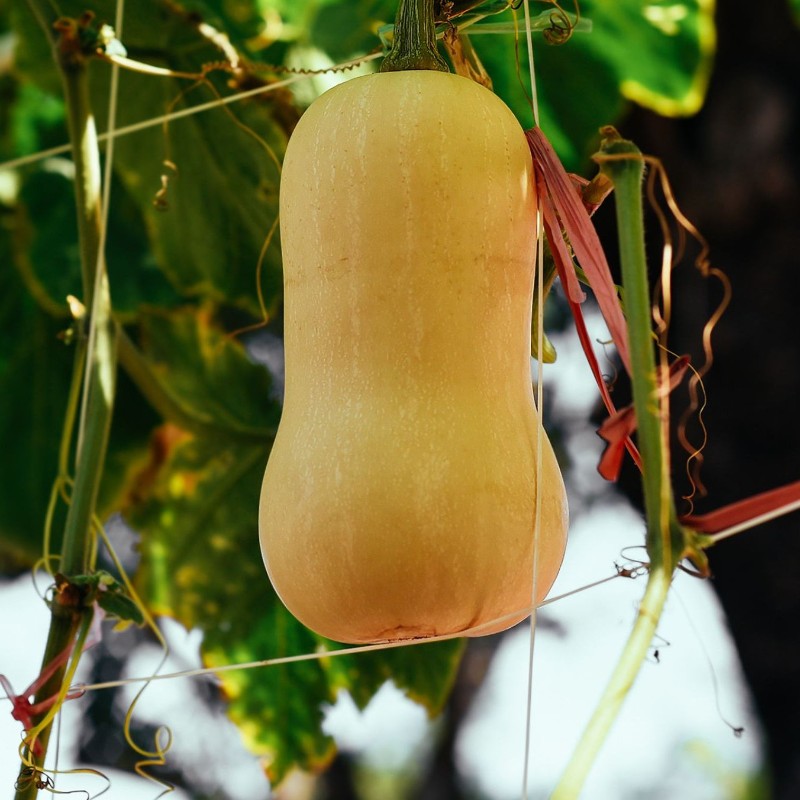
How to grow Butternut Squash (Hunter F1)
Cucurbita moschata
The Hunter F1 is an early maturing Butternut Squash specifically developed over 10 years to suit the UK climate. It produces strong plants yielding 6-7 light tan fruits with sweet, bright orange flesh and excellent flavour. Matures up to 4 weeks earlier than other varieties, with a more compact, open habit and slightly smaller fruit. Stores very well, lasting to Christmas and beyond. A real winner, especially for cooler climates where squash growing was once a dream.
At a glance: Sow mid May to late May, harvest from late August.
When to sow, plant and harvest
Timed for a typical UK garden (last frost mid-April). The app uses your own town's frost dates.
Growing Butternut Squash (Hunter F1): what it needs
- Light
- Full sun · 8+ hours a day
- Watering
- Every 2-3 days
- Soil
- Rich, well-draining, humus-rich · pH 6.0–7.0
- Spacing
- 50cm apart
- In pots
- Grows well in containers
- Feeding
- Feed every 14 days with a potash rich fertiliser once established and fruiting.
- Harvest
- About 120 days from sowing
- Hardiness
- USDA zones 3–10
- Difficulty
- Easy
Step by step
- Mid May – late May · 4 weeks after the last spring frost
Sow Butternut Squash Outdoors (optional)
To give a good start, dig a 30cm square hole and fill with well-rotted manure. Cloche the area a week before sowing. Mound up soil and plant 2 seeds, 2.5cm deep, every 50cm. Cloche again until seedlings grow.
- 5–8 days after “Sow Butternut Squash Indoors” · Mid May – late May
Check for Germination
Seedlings should emerge in 5-8 days. Ensure consistent warmth and moisture. For outdoor sowing, seed will not germinate until the temperature is consistently above 13°C.
- 7 days after “Plant Out / Establish Outdoors” · Late May
Initial Care and Feeding
As they are hungry feeders, begin feeding them every 14 days with a potash rich fertiliser. Keep well watered but try not to wet the fruit.
- 90–150 days after “Initial Care and Feeding” · Late August – late October
Harvest Butternut Squash
Harvest fruits from September to October. Pick any remaining fruits before the first frosts. These can be stored in frost-free conditions and can last to Christmas and beyond.
Good companions
corn,beans,marigold