 PlantSowGrow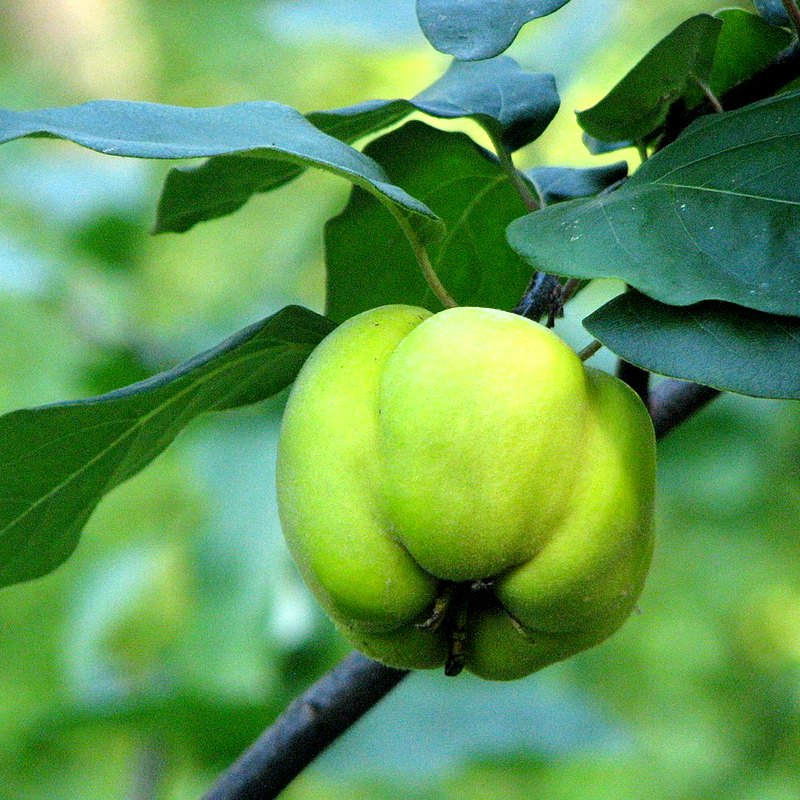
How to plant and care for Quince (Meech's Prolific)
Cydonia oblonga
A highly ornamental and productive quince tree, 'Meech's Prolific' is known for its large, fragrant, golden-yellow fruit. Excellent for preserves, jellies, and baking. It also offers beautiful pink-white blossoms in spring.
At a glance: harvest in October.
When to plant and care for it
Timed for a typical UK garden (last frost mid-April). The app uses your own town's frost dates.
Growing Quince (Meech's Prolific): what it needs
- Light
- Full sun · 6+ hours a day
- Watering
- Regular during establishment, then during dry spells
- Soil
- Well-draining, fertile loam · pH 6.0–7.0
- Spacing
- 4-6m apart
- In pots
- Best in the ground
- Feeding
- Annually in early spring with a balanced fruit tree fertilizer.
- Harvest
- About 1095 days from sowing
- Hardiness
- USDA zones 5–9
- Difficulty
- Easy_to_intermediate
Step by step
- On planting day
Plant Quince Tree
Dig a hole twice as wide as the root ball and just as deep. Place the tree, ensuring the graft union is above soil level. Backfill and firm gently.
- Straight after “Plant Quince Tree”
Water In Thoroughly
Water deeply immediately after planting to settle the soil around the roots.
- 1 day after “Water In Thoroughly”
Stake Young Tree
Install a sturdy stake to support the young tree for its first 1-2 years, preventing wind rock.
- 30 days after “Stake Young Tree”
First Feeding (Establishment)
Apply a slow-release, balanced fertilizer around the base of the tree, avoiding direct contact with the trunk.
- 60–180 days after “First Feeding (Establishment)”
Monitor Establishment
Regularly check for signs of stress, pests, or disease. Ensure consistent watering during dry periods for the first year.
Every year
- FebruaryDormant Pruning
Prune quince trees in late winter while dormant to remove dead, diseased, or crossing branches and to shape the tree. Aim for an open structure.
- MarchSpring Fertilization
Apply a balanced fruit tree fertilizer in early spring as new growth begins.
- AprilApply Spring Mulch
Refresh mulch layer around the base of the tree to conserve moisture, suppress weeds, and regulate soil temperature.
- AprilSpring Pest/Disease Check
Inspect tree for early signs of pests (e.g., aphids, scale) or diseases (e.g., leaf spot, fire blight) as leaves emerge.
- JulyMonitor & Water in Dry Spells
Ensure the tree receives adequate water, especially during prolonged dry periods in summer and when fruits are developing.
- AugustSummer Pest/Disease Check
Continue monitoring for pests and diseases throughout the summer growing season.
- OctoberHarvest Quince
Harvest quinces when they turn fully golden-yellow and are fragrant, typically in late autumn before hard frosts.
- NovemberWinter Protection (Young Trees)
For young trees in colder zones, consider providing winter protection to the trunk.
More trees to grow
Photo: Agnieszka Kwiecień, Nova / Wikimedia Commons (CC BY-SA 4.0)
