PlantSowGrow
How to plant and care for Greengage (Cambridge Gage)
Prunus domestica subsp. italica
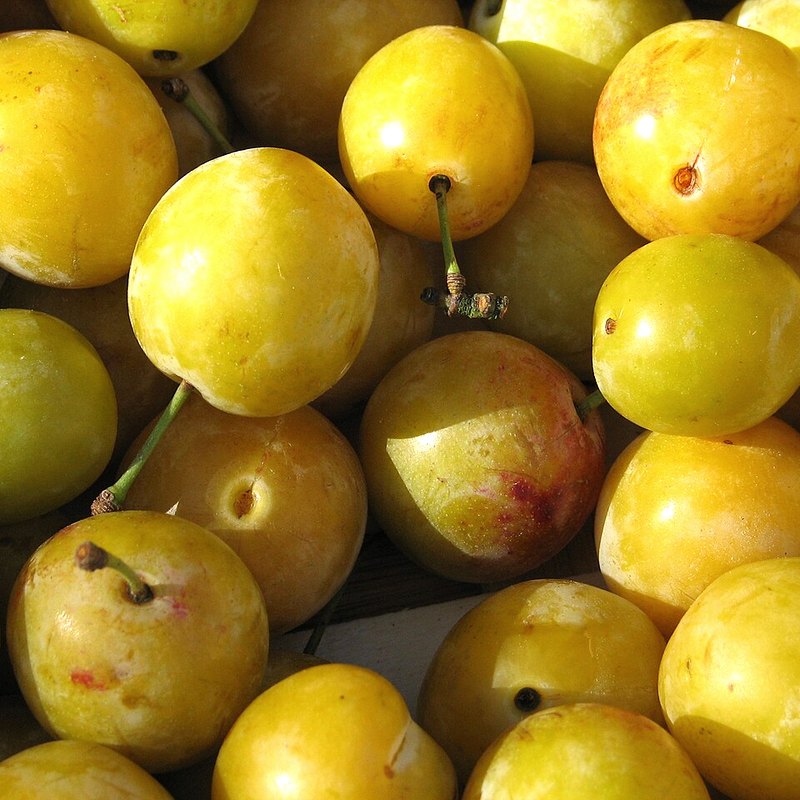
A classic English greengage variety, 'Cambridge Gage' is known for its sweet, juicy, green-yellow fruit. It's a reliable cropper and self-fertile, though yields improve with a pollinator.
At a glance: harvest in August.
When to plant and care for it
Timed for a typical UK garden (last frost mid-April). The app uses your own town's frost dates.
Growing Greengage (Cambridge Gage): what it needs
- Light
- Full sun · 6+ hours a day
- Watering
- Regularly during establishment and dry spells
- Soil
- Well-draining, fertile loam · pH 6.0–7.0
- Spacing
- 4-6m apart
- In pots
- Best in the ground
- Feeding
- Feed in early spring with a balanced fruit tree fertilizer.
- Harvest
- About 90 days from sowing
- Hardiness
- USDA zones 5–9
- Difficulty
- Intermediate
Step by step
- On planting day
Plant Greengage Tree
Dig a hole twice as wide as the root ball and to the same depth. Place the tree, backfill with soil, and water thoroughly.
- 1 day after “Plant Greengage Tree”
Stake Tree for Support
Install a sturdy stake to support the young tree, especially in windy areas. Use a flexible tie to prevent chafing.
- 1 day after “Stake Tree for Support”
Initial Watering & Mulching
Water deeply after planting. Apply a 5-10cm layer of organic mulch around the base, keeping it away from the trunk.
- 30 days after “Initial Watering & Mulching”
First Establishment Feed
Apply a slow-release, balanced fertilizer suitable for fruit trees to aid establishment.
- 60 days after “First Establishment Feed”
Check Tree Establishment
Monitor the tree for signs of new growth and overall health. Ensure adequate watering during dry periods.
Every year
- MarchSpring Feed & Mulch
Apply a balanced fruit tree fertilizer and replenish mulch around the base of the tree.
- AprilSpring Pest & Disease Check
Inspect for early signs of pests (e.g., aphids) or diseases (e.g., blossom wilt).
- JulySummer Pruning (Plums)
Prune plum trees in summer to maintain shape, improve light penetration, and reduce risk of Silver Leaf disease.
- JulyWatering in Dry Spells
Ensure adequate watering during prolonged dry periods, especially when fruit is developing.
- AugustHarvest Greengages
Pick greengages when they are fully ripe, soft to the touch, and have developed their characteristic sweet flavor.
- OctoberAutumn Clean-up
Clear fallen leaves and fruit from around the tree to reduce overwintering pests and diseases.
- DecemberWinter Protection Check
Inspect tree for any damage and ensure stakes/ties are secure for winter.
Good companions
comfrey, nasturtium, chives