 PlantSowGrow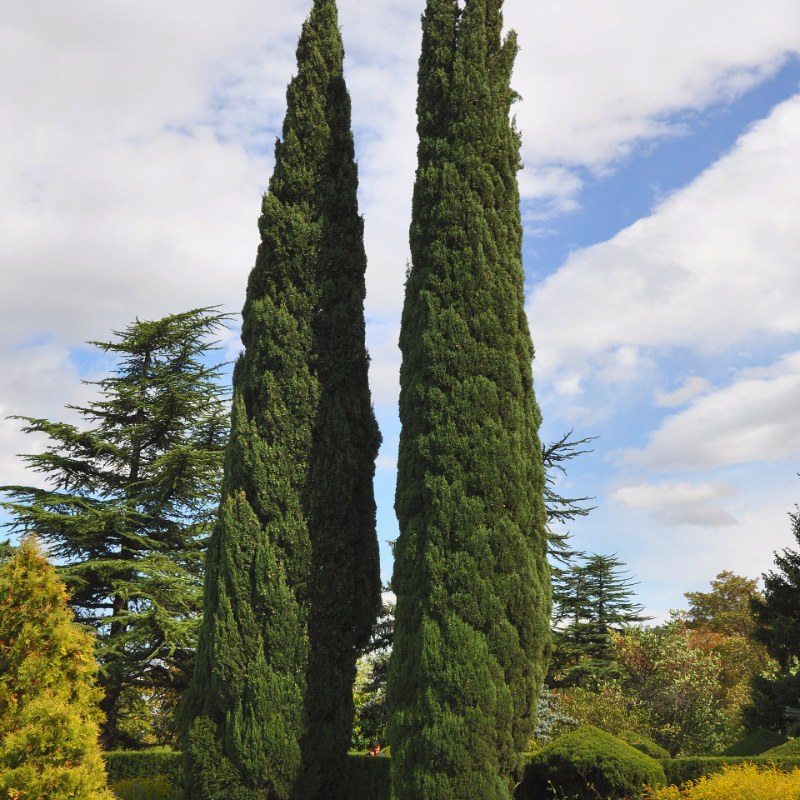
How to plant and care for Mediterranean Cypress
Cupressus sempervirens
Also called Italian cypress, Tuscan cypress, pencil pine, cypress, Cupressus
A classic evergreen conifer, the Mediterranean Cypress is known for its distinctive tall, slender, and columnar form. Its dark green, scale-like foliage provides year-round interest and a strong vertical accent in the garden. Once established, it is remarkably drought-tolerant and makes an excellent choice for screening, windbreaks, or as a striking specimen tree in UK gardens, particularly in milder regions.
Growing Mediterranean Cypress: what it needs
- Light
- Full sun · 6+ hours a day
- Watering
- Water regularly until established, then drought-tolerant.
- Soil
- Well-drained soil, tolerates poor soil. · pH 6.0–8.0
- Spacing
- 3-5 m as a specimen tree, 1-2 m for a screen or hedge
- Height
- Can reach 20-30 m, but often kept smaller with pruning.
- In pots
- Best in the ground
- Feeding
- Generally not needed once established; balanced feed for young plants if growth is poor.
- Hardiness
- USDA zones 7–9
- Difficulty
- Easy
Step by step
- On planting day
Plant the Tree
Plant at the same depth it grew in its pot, in a hole twice as wide as the root ball, 3-5 m as a specimen tree, 1-2 m for a screen or hedge from other trees. Firm and water well.
- 0–1 days after “Plant the Tree”
Stake and Tie
Drive a short stake in on the windward side and fix it with a soft tree tie. Loosen the tie each spring so it never cuts into the bark.
- 0–2 days after “Stake and Tie”
Water In Deeply
Soak the root area with a full can, then keep the soil moist (not wet) for the first few weeks.
- 7–21 days after “Water In Deeply”
Mulch the Base
Spread 5–8 cm of compost or bark mulch in a 1 m circle, keeping it clear of the trunk.
Every year
- AprilSpring Feed (Young Plants)
Give young trees a balanced feed if growth is poor, and mulch.
- AugustTrim for Shape
Trim to maintain desired height and shape, typically in late summer or early autumn.