PlantSowGrow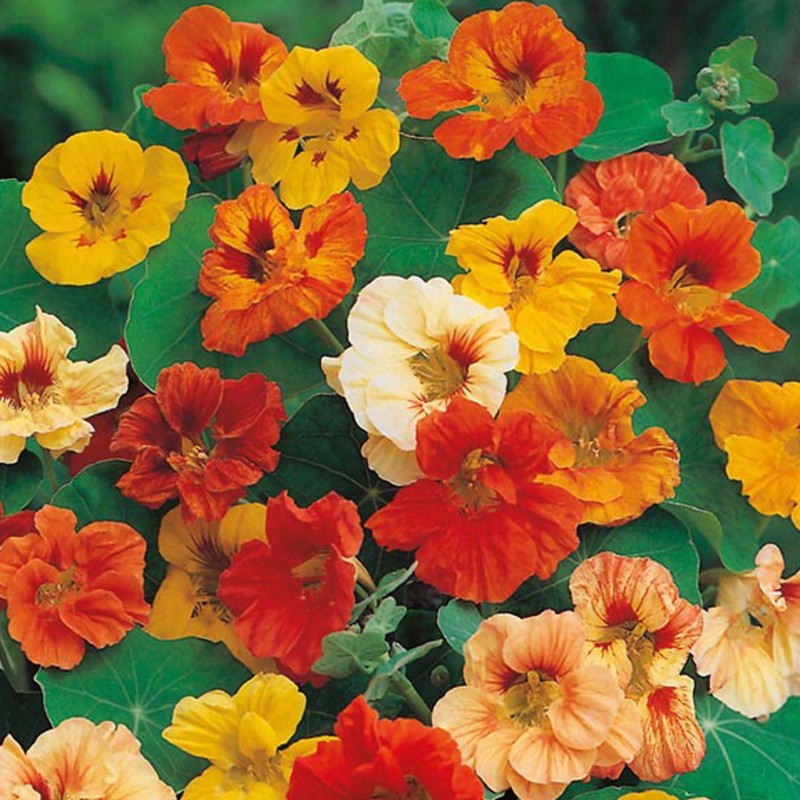
How to grow Nasturtium (Jewel of Africa)
Tropaeolum majus
Nasturtium Jewel of Africa is an eye-catching mix of coloured trumpet shaped flowers in a range of single colours from yellow to red & cream with variegated foliage. Nasturtium Jewel is an annual trailing plant that is fab in a hanging basket or looks lovely trailed through & around other plants especially in the veg patch. It can reach over 1.5m. The pretty flowers & young leaves are edible with a sweet peppery taste that livens up a salad with flavour & colour and have become restaurant chefs gourmet treat. Nasturtiums also have seeds that can be eaten they are usually pickled in vinegar and used as a caper substitute. Nasturtium Jewel of Africa has excellent companion planting qualities. Its colourful flowers attract bees/beneficial insects that not only eat aphids but help aid pollination of surrounding plants. Nasturtiums area also an excellent sacrificial companion plant as the cabbage white butterfly prefers to lay its eggs on the nasturtiums rather than the brassicas, so trail around the Kale or Brussels sprouts. It has lots of leafy foliage and if left to trail around the base of plants acts like a green manure to suppress weeds and retain moisture within the soil. An exciting addition to the garden with pretty flowers that are not only edible but loved by bees/beneficial insects and is a very useful companion plant. It self-seeds easily but this can be viewed as an advantage considering its usefulness in the garden.
At a glance: Sow mid March to mid June, harvest from early May.
When to sow, plant and harvest
Timed for a typical UK garden (last frost mid-April). The app uses your own town's frost dates.
Growing Nasturtium (Jewel of Africa): what it needs
- Light
- Full sun · 6+ hours a day
- Watering
- as_needed
- Soil
- poor_to_average, well_draining · pH 6.0–7.0
- Spacing
- 30cm apart
- In pots
- Grows well in containers
- Feeding
- No heavy fertilization needed; thrives in poor soil.
- Hardiness
- USDA zones 3–10
- Difficulty
- Easy
Step by step
- Mid March – mid June · 4 weeks before the last spring frost
Sow Nasturtium Seeds Outdoors
Direct sow seeds 2cm deep, 30cm apart, into well-prepared ground where they are to flower. Keep soil moist.
- 7–14 days after “Sow Nasturtium Seeds Outdoors” · Late March
Check for Germination
Seedlings should emerge in 7-14 days. Ensure the soil remains consistently moist during this period.
- 14 days after “Check for Germination” · Early April
Thin Nasturtium Seedlings (optional)
If sown too thickly, thin seedlings to 30cm apart once they have developed a few true leaves.
- 30–180 days after “Thin Nasturtium Seedlings” · Early May – early October
Harvest Nasturtiums
Begin harvesting young leaves and flowers for salads. Pick regularly from June to October to encourage more blooms and foliage. Young seeds can also be pickled as caper substitutes.
Good companions
brassicas, kale, brussels sprouts