 PlantSowGrow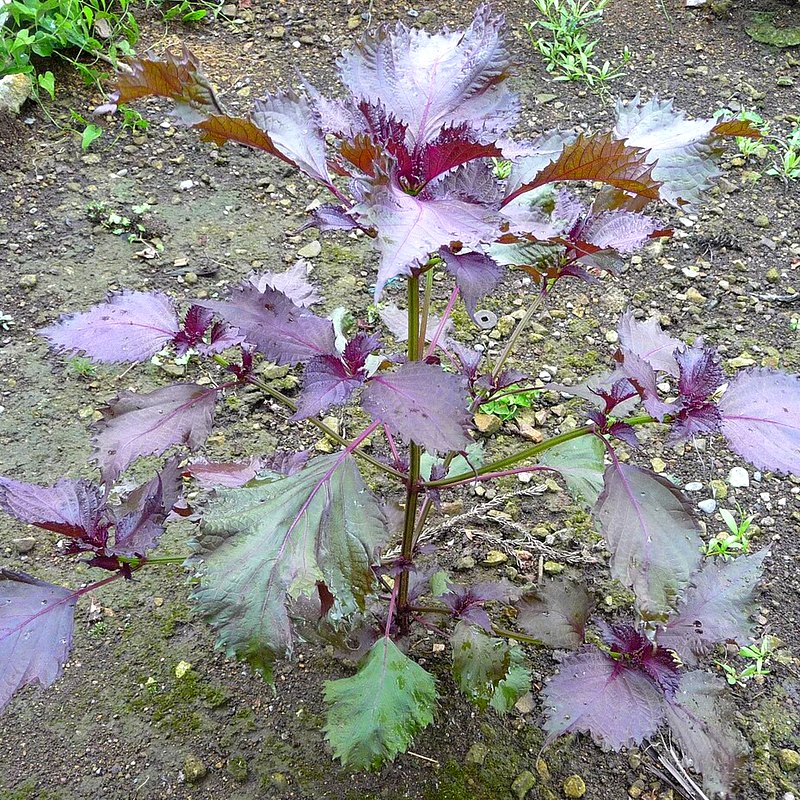
How to grow Perilla (Shiso)
Perilla frutescens var. crispa
Frilly purple leaves with a spicy mint–basil–cumin flavour, used in Japanese and Korean cooking — and a striking bedding plant too.
At a glance: Sow mid February to late March, harvest from early May.
When to sow, plant and harvest
Timed for a typical UK garden (last frost mid-April). The app uses your own town's frost dates.
Growing Perilla (Shiso): what it needs
- Light
- Full sun · 6+ hours a day
- Watering
- Keep evenly moist; water pots daily in hot weather
- Soil
- Fertile, well-drained soil
- Spacing
- 30 cm
- Height
- 60 cm
- In pots
- Grows well in containers
- Feeding
- A liquid feed every two weeks for pot-grown plants
- Harvest
- About 60 days from sowing
- Hardiness
- USDA zones 9–11
- Difficulty
- Easy
Step by step
- Mid February – late March · 8 weeks before the last spring frost
Sow Seeds Indoors
Sow in modules or small pots of seed compost in small pots on a bright windowsill. Surface-sow — the seed needs light — and keep at 20°C.
- 10–21 days after “Sow Seeds Indoors” · Late February – mid March
Check Germination
Seedlings should appear in 10–21 days. Keep the compost moist. If sown outdoors, thin to 30 cm apart.
- 14–21 days after “Check Germination” · Mid March – late March
Pot On Seedlings
Move small clumps of seedlings into 9 cm pots (herbs are happy grown in little clumps).
- Late April · 11 days after the last spring frost
Harden Off
Stand plants outside by day for a week before planting out.
- Early May – early June · 3 weeks after the last spring frost
Plant Out
Plant 30 cm apart in a sunny bed or a pot near the kitchen door. Water in.
- 39–60 days after “Check Germination” · Early May – late May
Start Harvesting
Pick the top leaves often to keep the plant bushy. Take a photo for the journal.
- 21–35 days after “Start Harvesting” · Late May – early June
Pinch Out Flower Buds
Pinch out flower spikes for more leaves.
- Mid October – early November · around the first autumn frost
End of Season
When plants run to seed or the frost gets them, pull them up for compost — leave a few to self-seed if you like.