PlantSowGrow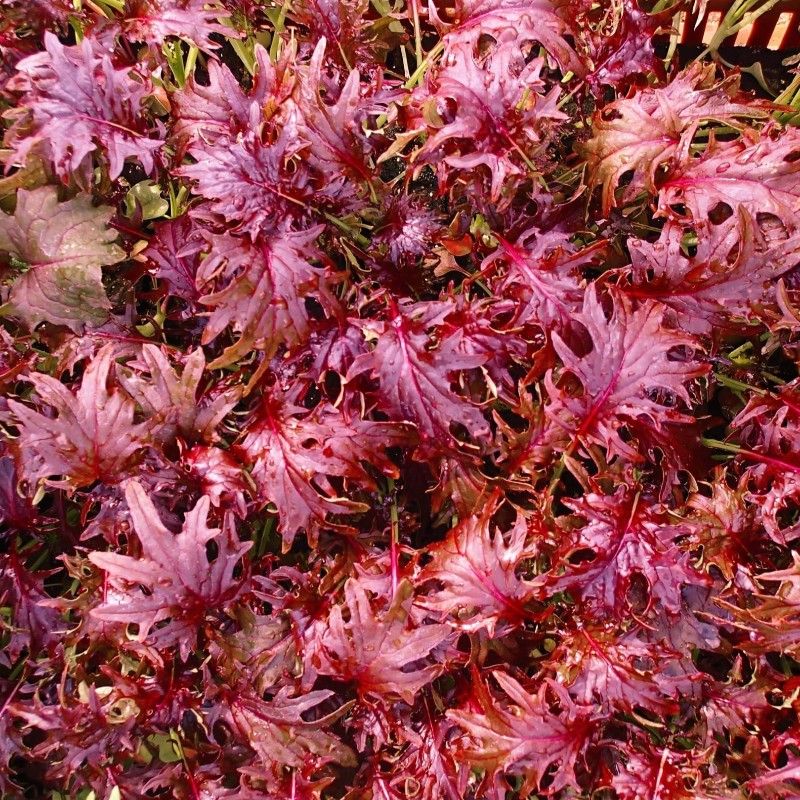
How to grow Kale (Red Ruble)
Brassica oleracea var. sabellica
Kale 'Red Ruble' is a quick-growing, colourful variety specially bred for the salad leaf market. It features attractive wine-red serrated foliage, perfect for microgreen and baby leaf production. While it can be grown to mature size, it loses its intense colour, making it ideal for early harvests. Packed with vitamins and up to 10 times more iron than other kale varieties, it's a nutritious choice for salads. Baby leaves are ready in about 6 weeks.
At a glance: Sow late May to mid August, harvest from mid July.
When to sow, plant and harvest
Timed for a typical UK garden (last frost mid-April). The app uses your own town's frost dates.
Growing Kale (Red Ruble): what it needs
- Light
- Full sun · 6+ hours a day
- Watering
- Every 1-2 days
- Soil
- Rich, well-draining, moist · pH 6.0–7.0
- Spacing
- 5cm apart for baby leaf
- In pots
- Grows well in containers
- Feeding
- Not typically needed for baby leaf production if sown in good compost. Light feeding for mature plants.
- Harvest
- About 42 days from sowing
- Hardiness
- USDA zones 3–9
- Difficulty
- Easy
Step by step
- Late May – mid August · 6 weeks after the last spring frost
Sow Kale Seeds Outdoors (optional)
Direct sow seed thinly outside in a drill 0.5cm deep, in rows 15cm apart. Keep well watered.
- 4–10 days after “Sow Kale Seeds Indoors” · Early June
Check Germination
Seedlings should emerge in 4-10 days. Ensure consistent moisture and appropriate temperature.
- 10 days after “Check Germination” · Mid June
Thin Seedlings
Thin seedlings to 5cm apart for baby leaf production. The thinnings can be used for salads.
- 30–60 days after “Thin Seedlings” · Mid July – mid August
Harvest Baby Leaf Kale
Begin harvesting baby leaves when they reach desired size, typically about 6 weeks after sowing. Pick outer leaves to encourage continuous production.
Good companions
beetroot, carrot, celery, cucumber, dill, garlic, lettuce, marigold, mint, nasturtium, onion, potato, rosemary, spinach, thyme