 PlantSowGrow
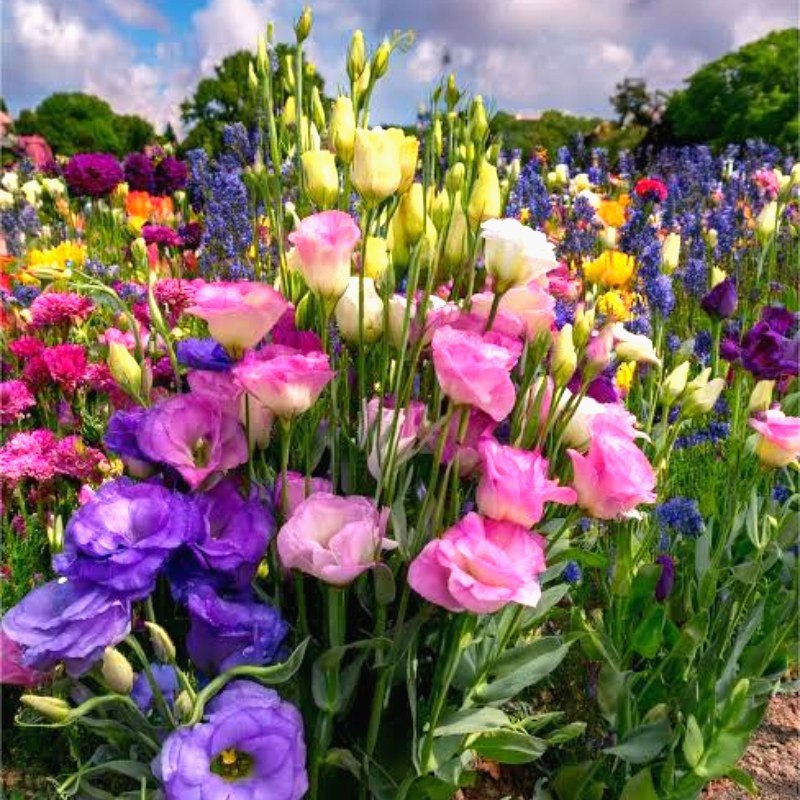
How to grow Lisianthus (Tall Mixed)
Eustoma grandiflorum
Also called prairie gentian, Texas bluebell, Eustoma, Eustoma russellianum
Elegant rose-like blooms in white, pink, purple and bicolours on long, wiry stems. They are superb for cutting and last up to two weeks in a vase. Lisianthus is very slow from seed, so sow in midwinter in a heated propagator. It needs a sunny, sheltered spot or an unheated greenhouse to flower well in the UK.
At a glance: Sow early December to early February.
When to sow, plant and harvest
Timed for a typical UK garden (last frost mid-April). The app uses your own town's frost dates.
More to sow and plant in January, February, May, June and December.
Growing Lisianthus (Tall Mixed): what it needs
- Light
- Full sun · 6+ hours a day
- Watering
- Keep evenly moist but never waterlogged; water at the base, not over the foliage; check pots daily in summer
- Soil
- Fertile, free-draining soil, neutral to slightly alkaline; dislikes heavy wet clay · pH 6.5–7.5
- Spacing
- 20 cm
- Height
- 60–90 cm
- In pots
- Grows well in containers
- Feeding
- Give a balanced liquid feed every two weeks from planting out, then switch to a high-potash feed once flower buds form
- Hardiness
- USDA zones 2–11
- Difficulty
- Hard
Step by step
- Early December – early February · 18 weeks before the last spring frost
Sow Seeds Indoors
Sow in modules or trays of fine seed compost in a heated propagator at 20–25°C. The dust-fine seed is often sold pelleted. Press it onto the surface without covering, as it needs light to germinate, and keep it humid under a clear lid.
- 10–21 days after “Sow Seeds Indoors” · Mid December – late December
Check Germination
Seedlings should appear in 10–21 days at 20–25°C. They are tiny and grow very slowly at first. Keep the compost just moist by watering from below, and give them the brightest light you can, ideally a grow light, to stop them going leggy.
- 28–42 days after “Check Germination” · Mid January – late January
Pot On Seedlings
When seedlings have two to four true leaves, usually 4–6 weeks after germinating, move each into its own module or small pot. Hold them by a leaf, not the stem, and disturb the roots as little as possible. Grow on at 15–20°C in good light.
- Early May · 3 weeks after the last spring frost
Harden Off
From early May, stand plants outside in a sheltered spot by day and bring them in at night for 10–14 days so they get used to outdoor conditions. Keep them in on cold or windy days.
- Mid May – early June · 4 weeks after the last spring frost
Plant Out
Plant out 20 cm apart in a sunny, sheltered spot once nights stay reliably mild, usually late May to early June. Alternatively, plant them in a greenhouse or polytunnel border. Plant at the same depth as in the pot, without burying the stem, and water in well.
- 7–14 days after “Plant Out” · Mid May – late May
Pinch Out Tips (optional)
When plants have four to six pairs of leaves, pinch out the growing tip above the third pair to get more flowering stems. This delays flowering by 2–3 weeks, so skip it if you want the earliest blooms on single long stems.
- 14 days after “Pinch Out Tips” · Early June
Add Support
Lisianthus stems are slender and top-heavy in flower. Stretch horizontal mesh netting about 30 cm above the plants, or use canes and string, before the stems start to lean.
- 140–170 days after “Check Germination” · Early June – early July
First Flowers — Cut and Deadhead
For the vase, cut stems when the first one or two flowers have opened; the remaining buds will open in water. Snip off faded flowers to keep plants tidy. Cutting stems back after the first flush can give a second flush in early autumn. Take a photo for your journal!
- Mid October – early November · around the first autumn frost
Clear Away Plants
Lisianthus is grown as an annual in the UK. When frost blackens the plants, pull them up for the compost heap. Most varieties are F1 hybrids that will not come true from saved seed, so buy fresh seed for next year.